Fans Don’t Just Buy. They Carry the Story.

At Taipei’s Bangka Longshan Temple, some BTS fans recently did what people have done for centuries when something mattered more than logic could comfortably hold. They brought offerings. They made wishes. They asked for help. In this case, the help they wanted was not a marriage, a cure, a child, or a safer passage across the sea. They wanted concert tickets.
According to Reuters, fans gathered before Yue Lao, the Taoist god associated with love and marriage, hoping the red thread of fate might connect them to seats for BTS’s upcoming concerts in Kaohsiung. They brought purple-packaged snacks, BTS merchandise, and handwritten wish lists. On the surface, it is an amusing little story about the absurd lengths people will go to when tickets are hard to get. But I think that is too easy. What interests me is not that fans prayed for tickets. What interests me is that the story made complete human sense.
We tend to flatten fandom when we talk about it. We turn it into spending behavior, audience demand, market power, social media intensity, or brand loyalty. All of that can be true, but none of it is quite enough. People do not line up, travel, collect, post, organize, translate, defend, and sometimes pray because they merely like a product. They do those things because the thing they love has become entangled with who they are, who they have found, what they remember, and where they feel they belong.
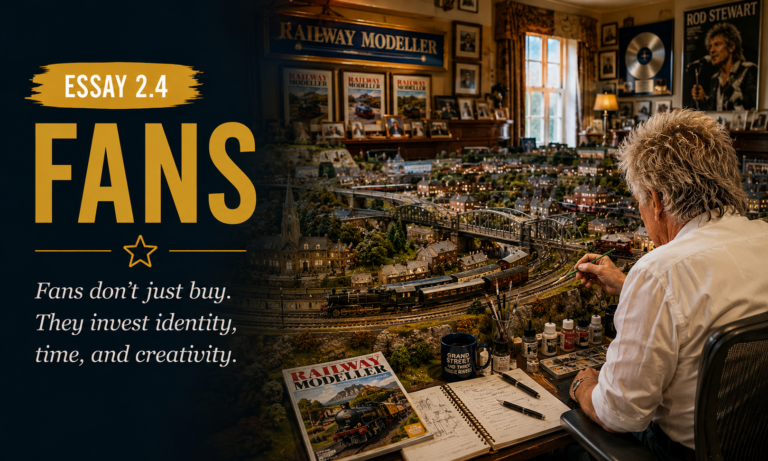
That is the heart of the matter. Fandom often begins with admiration, but it rarely stays there. At some point, a song, a team, a writer, a band, a car, a pen, a comic book, a model railway, or a sport becomes a doorway into a larger story. You meet other people who care about the same thing. You learn the language. You recognize the symbols. You know what the color means, what the chant means, what the inside joke means. Over time, you are no longer simply consuming something. You are participating in a world of meaning organized around it.
This is why the temple story is so rich. It is not just fandom plus scarcity. It is fandom becoming ritual. It is fans translating the stress of access into a cultural form they understand. It is the practical problem of getting a ticket becoming the spiritual language of hope, fate, and belonging. Nobody needs to over-romanticize it. The story is still about concert seats. But the seats matter because of what they hold: a chance to be there, with others, when something meaningful happens in shared time.
There is a science and sociology underneath this. Émile Durkheim wrote about collective effervescence, that feeling of being swept into something larger than yourself when people sing, chant, move, cheer, pray, or grieve together. Modern fandoms are full of it. A stadium singing a club anthem. A theater audience rising at the same moment. A concert crowd lighting up in the same color. A group of fans gathering at a temple with the same wish. We keep rediscovering that human beings do not only want private enjoyment. We want shared recognition. We want the feeling that what moved us also moved someone else.
That is also why brands and institutions so often mishandle fans. They see intensity and read it as revenue. They see devotion and read it as demand. They see community and read it as a marketing channel. But fans are not merely reachable audiences. They are caretakers of meaning. They carry the story when the official campaign ends. They defend it, reinterpret it, personalize it, and hand it to others. When they feel seen, they can become the most generous participants imaginable. When they feel harvested, they know it immediately.
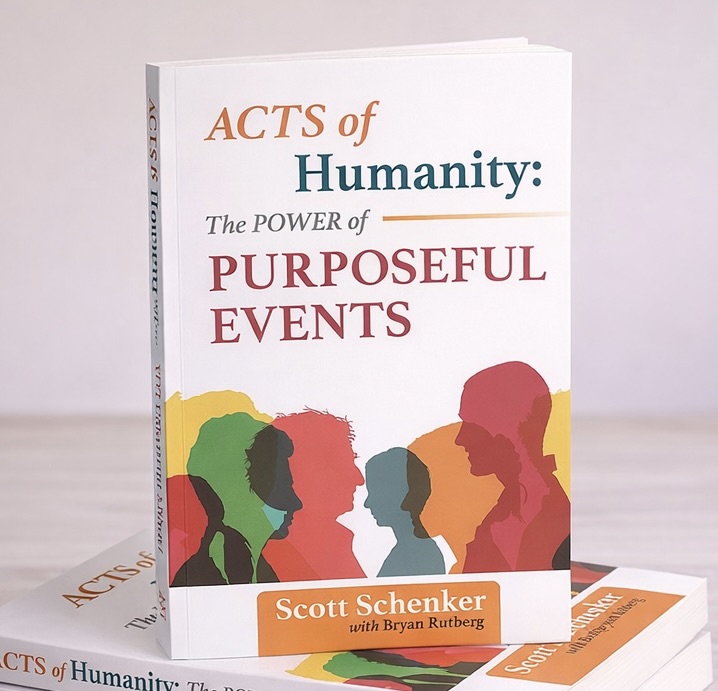
While writing Acts of Humanity: The Power of Purposeful Events, I kept coming back to this threshold. In the book I wrote that fans are participants who have crossed a line: they no longer just consume, they identify. That matters because experiences and gatherings are often where that crossing becomes visible. The ticket, the wristband, the key fob, the scarf, the lanyard, the seat, the temple offering — each becomes a small physical proof of a larger emotional connection.
The lesson is not that every organization needs fans in the pop-culture sense. The lesson is that meaning deepens when people can recognize themselves inside a shared story. Some people find that through music. Some through sports. Some through faith, craft, family, activism, books, watches, games, neighborhoods, or professional communities. The object changes. The human pattern remains.
So the question for anyone who gathers people is not simply, how do we attract fans? It is better than that. What story are people trying to belong to? What rituals help them recognize one another? What signals tell them they are not just customers, attendees, users, or members, but participants in something they have chosen to care about? And perhaps most important, are we worthy of the meaning they are bringing with them?
Source notes for verification
Reuters — Taiwan fans seek divine help to secure K-pop band BTS concert seats: https://www.reuters.com/world/asia-pacific/taiwan-fans-seek-divine-help-secure-k-pop-band-bts-concert-seats-2026-05-31/
Vogue — Inside the superfan economy: https://www.vogue.com/article/inside-the-superfan-economy