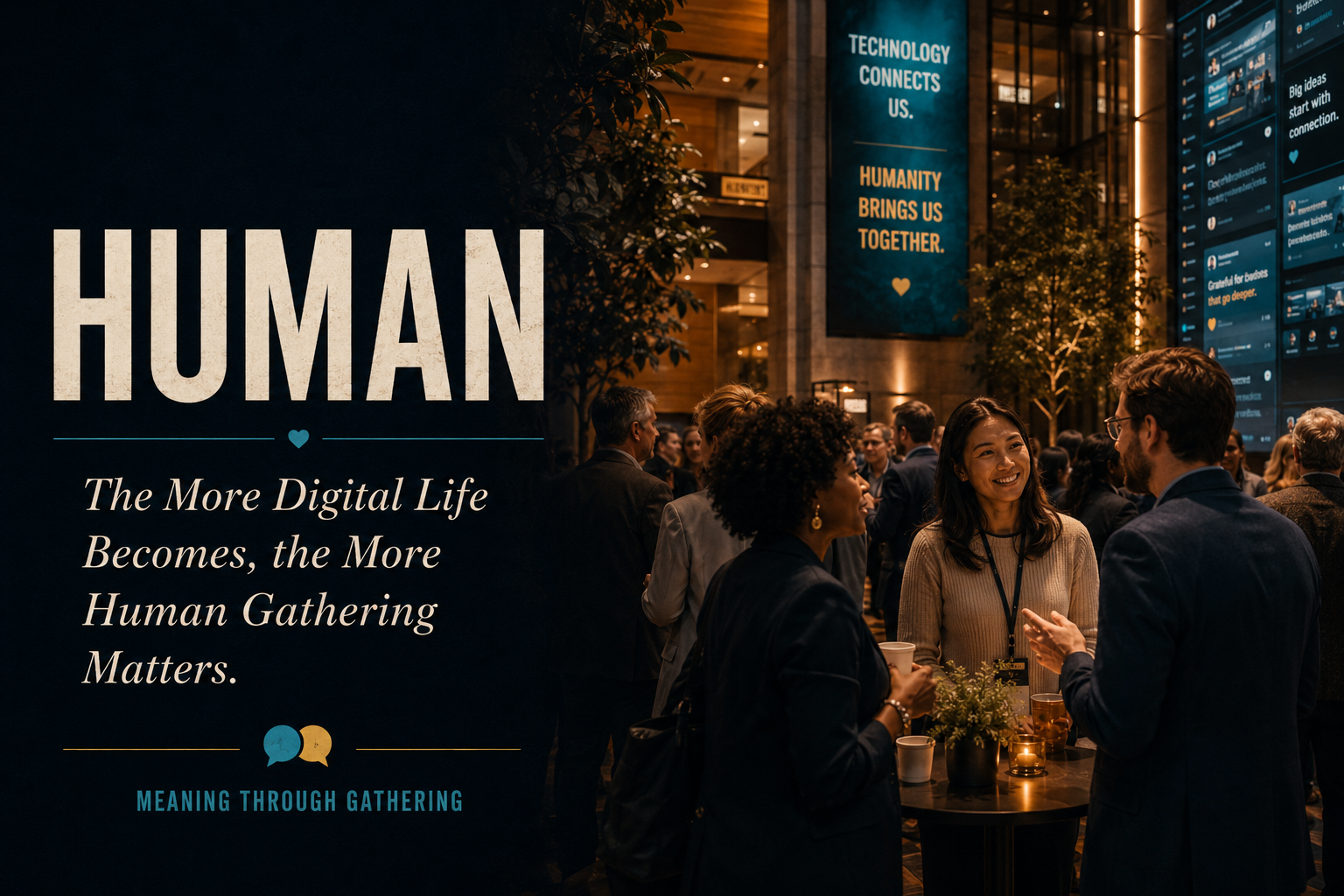
Human Beings Are Not Just Social. We Are Relational.

One of the more interesting stories in the future-of-work conversation is not that older executives want people back in the office. That story has been told so often it has become predictable. The more interesting story is that some younger workers may want, or at least need, more of the office than we expected.
Recent reporting on New York Fed-related research suggests that remote work may have damaged one of the least visible parts of the career ladder: the early rung. It is harder to train inexperienced workers at a distance. Harder to notice confusion. Harder to pull someone into a conversation they did not know they needed. Harder to let them overhear how a senior person handles a client, a conflict, a mistake, or an ambiguous decision. Axios also reported Gallup data showing that fewer than a quarter of remote-capable Gen Z workers prefer fully remote jobs. That does not mean every young worker wants five days in a cubicle. It does suggest that the old story — young people want everything online and older people want everything in person — was too simple.
The question is what they are really missing. I doubt it is the badge reader, the commute, the parking garage, the office coffee, or the recurring meeting that could have been an email. What they may be missing is harder to name because it is not a line item. It is proximity. It is being seen. It is learning by watching. It is the accidental conversation before the formal conversation. It is the weak connection that eventually becomes a career sponsor. It is the person who says, ‘Come with me, you should hear this.’ It is the quiet accumulation of being known.
We often say human beings are social, and of course that is true. But social is too thin a word for what matters most. We can be social online, social in a crowd, social in a comment thread, social in a transaction. Relationship is different. Relationship carries memory, obligation, trust, recognition, repair, expectation, and care. A person can have a thousand contacts and still feel unknown. They can be in meetings all day and still feel disconnected. They can be surrounded by people and still not be in relationship with anyone.
That difference matters because meaning usually arrives through relationship. We know who we are partly because of who knows us. We become braver because someone believes we are capable. We change because someone helps us see ourselves differently. We endure because someone stays near enough to notice. We remember certain seasons of our lives not because the calendar was full, but because certain people were present inside that season.
The U.S. Surgeon General’s social connection advisory helped move loneliness and disconnection out of the category of personal mood and into the language of public health and civic life. That matters. But I worry that even the phrase social connection can still sound like a problem solved by more contact. More messages. More check-ins. More meetings. More platforms. More channels. The deeper need is not merely contact. The deeper need is relationship that can hold meaning.
This is where the remote-work argument often goes wrong on both sides. The office is not automatically relational. Plenty of people have spent years in offices where they were ignored, excluded, underused, or exhausted. Presence by itself does not create connection. But distance by itself does not preserve all the relationship-building work that used to happen almost invisibly around the work. When the office worked, it was rarely because of the space. It was because of the human exchange the space allowed.
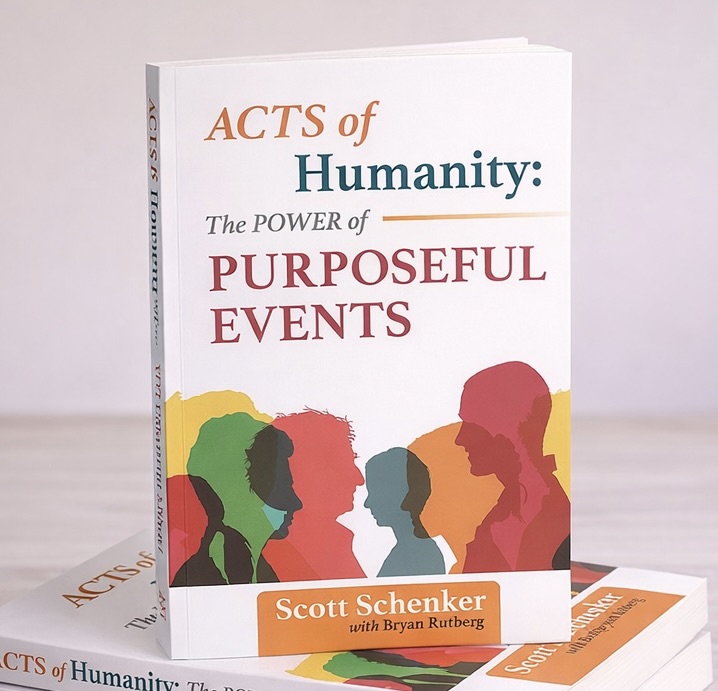
That distinction is part of what led me into Acts of Humanity: The Power of Purposeful Events. I was not really trying to write a book about events as logistics. I was trying to understand why gathering still matters when so much of what we once gathered for can now be delivered through a screen. One line in the manuscript says it plainly:
“We gather because we are wired for relationship. We survive with one another, and we make meaning through one another. The deepest things in our lives — love and loss, belonging and identity, courage and change — are relational.”
Seen that way, a gathering is not valuable because people are physically present. It is valuable when physical presence makes relationship more possible. That might happen at a sales kickoff, a family dinner, a board retreat, a community meeting, a memorial, a class reunion, a customer council, or a first day at work. It might also fail to happen in any of those places. The environment is an opportunity, not a guarantee.
So before asking whether people should be remote, hybrid, in person, online, offsite, onsite, or somewhere in between, we might ask a more human question. What relationships need to form, deepen, repair, or carry forward? Then we can decide what kind of presence those relationships require. Sometimes the answer will be digital. Sometimes it will be a phone call. Sometimes it will be a walk, a table, a room, a hallway, or a shared meal. The point is not to worship the where. The point is to remember what the where is for.
Source notes for verification
Axios — The career ladder’s disappearing rung: https://www.axios.com/2026/06/02/remote-work-unemployment
Business Insider — The Fed says a labor-market phenomenon is hurting youth employment: https://www.businessinsider.com/ai-gen-z-job-market-entry-level-wfh-fed-economy-2026-6
Axios — Why Gen Z wants more office work: https://www.axios.com/2026/02/28/genz-remote-work-office-job
U.S. Surgeon General — Social Connection advisory: https://www.hhs.gov/surgeongeneral/priorities/connection/index.html